
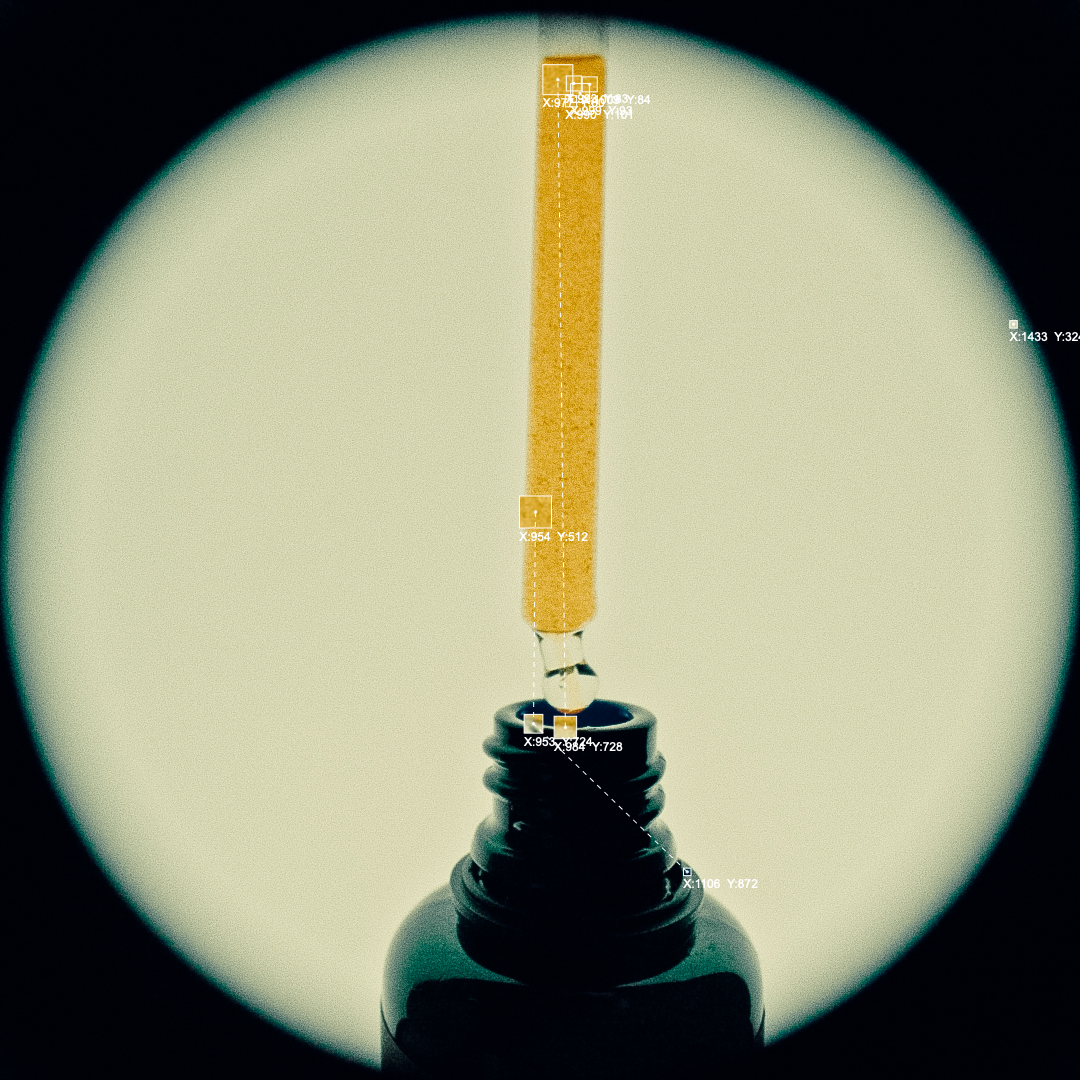
Most extraction methods are built to answer one question: how do we get the most of a single compound out of a plant? Spagyric extraction answers a different question: how do we keep everything the plant made?
It's a centuries-old alchemical process, and rather than pulling one part forward, it opens a plant fully, drawing out its full chemical profile rather than a single fraction of it. That difference: one compound versus the whole plant, is the reason we prepare our formulas the way we do. Here's what that actually means, and why it matters more than it might seem.
What Is Spagyric Extraction?
Spagyric extraction is a traditional alchemical method of preparing plants that separates a botanical into its essential components, purifies each one individually, and recombines them into a single, complete extract, rather than isolating one "active" compound and discarding the rest.
The word itself comes from Greek roots meaning to pull apart and bring together, which is the whole method in a phrase.
The Industry Default: Isolated, Standardized Extraction
Most botanical extracts on the market are standardized. A manufacturer identifies the one compound in a plant considered "active," extracts it using heat or chemical solvents, and calibrates the final product to hit a specific percentage of that compound. It's efficient. It's easy to put on a label. It's also, by design, incomplete.
Standardization treats a plant like a delivery vehicle for a single molecule. Everything else in the plant's chemistry: the minerals, the secondary compounds, the volatile constituents that don't show up on a spec sheet, gets discarded along the way. What's left is potent, but it's not the plant anymore. It's an ingredient extracted from a plant.
How Spagyric Extraction Works: Maceration, Distillation, Calcination, Recombination
Spagyric preparation separates a plant into its essential components, purifies each one on its own terms, and recombines them into a single, complete extract.
The tradition organizes a plant's chemistry into three parts, sometimes described as body, soul, and spirit:
-
Body: the mineral salts and physical matter of the plant
-
Soul: the essential oils and bioactive compounds
-
Spirit: the volatile, non-mineral plant matter
In practical terms, the spagyric extraction process moves through four stages:
-
Maceration: botanicals are soaked to draw out their soluble constituents
-
Distillation: the volatile essential oils are separated and concentrated, preserving their aromatic compounds
-
Calcination: the remaining plant material is incinerated to burn away impurities and reclaim its mineral-rich ash
-
Recombination: the essential oils, mineral salts, and remaining plant constituents are reunited and harmonized into a single extract
The point of the last step is the whole method: nothing is extracted to be kept in isolation. It's separated so it can be purified, and then it's put back together.
It's also worth noting what this process is not: it isn't a shortcut, and it isn't the same as a standard tincture, which typically draws out only a plant's soluble compounds and leaves the rest, including its mineral content, behind. Spagyric preparation is built specifically to recover what a standard tincture doesn't.
Why Full-Spectrum Extraction Matters Biochemically
This isn't just a philosophical preference for "the whole plant" over "a part of the plant", it has a mechanistic basis. Plants rarely produce a single compound in isolation; they produce families of related compounds that interact with each other, often in ways that affect how the body absorbs and uses them.
When a formula preserves that full matrix: minerals bound to organic acids, bioactive compounds alongside the co-factors that occur naturally with them, it's working with chemistry your body already has a relationship with, rather than a single molecule extracted out of its original context.
We're careful about how far we take this claim. Bioavailability differences between full-spectrum and isolated extracts are well documented in the research literature, but the exact percentage varies by compound, by preparation method, and by study design, so we won't put a single headline number here without the study behind it. If you want the specifics, our research library breaks down the citations by compound.
Historically, alchemists didn't think of this process as producing a purely chemical extract. Traditional spagyric texts describe the finished preparation as carrying both a pharmacological dimension and a subtler one, the sense that a plant is more than the sum of its measurable constituents. We're not in a position to make claims about that second part. What we can say is that we've built our process around the first: preserving as much of a plant's actual chemistry as the extraction method allows.
Spagyric Extraction vs. Standardized Extraction: Why We Don't Standardize
Standardization exists to make a product predictable and easy to compare. We understand the appeal. But it requires deciding in advance which single compound in a plant matters most, and we don't think that decision is ours, or anyone's, to make on a plant's behalf.
Wild American Shilajit isn't valuable because of one mineral. Our root and mushroom formulas aren't valuable because of one adaptogenic compound. They're valuable because of how everything in them works together, which is exactly the part that standardization leaves on the lab floor.
Spagyric extraction is slower and less convenient to manufacture than standardized extraction. It also means every batch reflects the actual plant it came from, not a number calibrated to match the last one. We think that trade-off is worth it.
The Short Version
Standardized extraction asks: how much of one compound can we isolate? Spagyric extraction asks: how do we keep everything the plant offers?
We've built our spagyric drops around the second question. Not because it's more marketable, but because it's a more honest way to work with a plant.
Frequently Asked Questions
What does "spagyric" mean? "Spagyric" comes from Greek roots meaning to pull apart and bring together, the core principle of separating a plant into its components, purifying each, and recombining them into one extract.
Is spagyric extraction the same as a tincture? No. A standard tincture typically draws out only a plant's soluble compounds and leaves the rest behind, including its mineral content. Spagyric extraction is built to recover the mineral salts and volatile constituents a standard tincture doesn't capture.
Which Fractal Forest products use spagyric extraction? Go State, Flow State, Dream State, Immune Intelligence, and our botanical drops are prepared using spagyric extraction.
These statements have not been evaluated by the FDA. Fractal Forest products are not intended to diagnose, treat, cure, or prevent any disease.